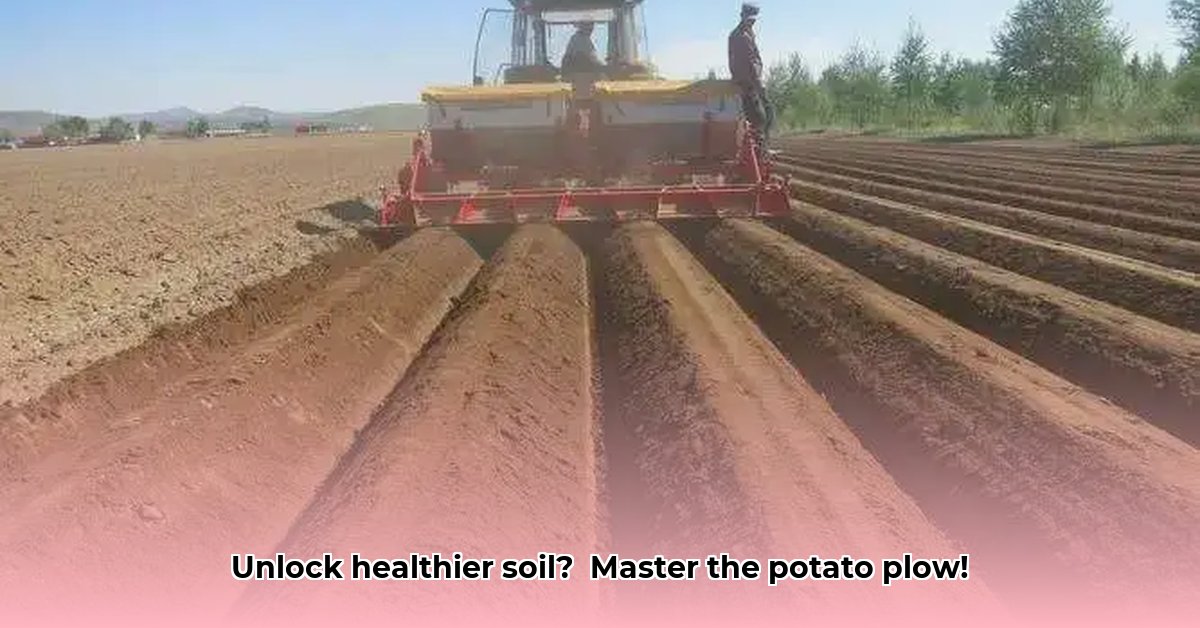
Getting the most from your potato harvest while nurturing your soil's health hinges on choosing the right potato plow. This guide navigates you through selecting the perfect plow, mastering its use, and integrating it into a sustainable farming strategy. We'll compare plow types, detail proper usage, offer maintenance tips, and explore long-term soil health improvement. Consider this your comprehensive handbook for enhanced potato farming and a healthier planet. For raised garden bed ideas, check out this helpful resource: raised garden beds.
Understanding Soil Health: The Foundation of Farming Success
Healthy soil isn't just dirt; it's a vibrant ecosystem teeming with beneficial microbes and organisms crucial for plant health. Healthy soil translates to robust plants, leading to increased yields and crops more resistant to pests and diseases. Neglecting soil health is akin to ignoring your car's engine – eventual failure is inevitable. Precision tillage, using tools like potato plows, is key to maintaining this vital ecosystem. Do you want to maximize crop yields and minimize environmental impact? Prioritizing soil health is the answer.
What's a Potato Plow? And Why Should I Care?
A potato plow is a specialized tillage tool designed for precision soil management. Unlike heavy plows that completely overturn large soil sections, potato plows gently work the earth. This minimizes disruption to the soil structure and its beneficial inhabitants. They create furrows, ridges, or hills—depending on the type and settings—improving weed control, water conservation, and soil aeration. It's about maximizing soil potential without unnecessary disruption. Are you looking for a more sustainable and efficient way to cultivate your potatoes? A potato plow could be the key.
Potato Plow Toolkit: Beyond the Plow
Optimizing soil management often requires more than just the potato plow; it's a coordinated approach. Key supporting tools include:
Middle Busters: These tools break up compacted soil layers deep underground, improving root penetration and access to water and nutrients. Think of compacted soil as a brick wall; the middle buster is the wrecking ball that breaks it down.
Hillers/Furrowers: These tools shape the soil into ridges (hills) or furrows (trenches), vital for ideal growing conditions. For potatoes, hilling creates soil mounds around the plants, improving drainage and protection. They create ideal growing conditions.
These tools work synergistically for a more efficient and sustainable tillage system.
Choosing the Right Plow: A Personalized Approach
Selecting the right potato plow is like choosing the right shoes—the proper fit is crucial. Key factors to consider include:
Soil Type: Heavy clay soils require different treatment than lighter sandy soils. A heavy-duty plow might be necessary for clay, while a lighter model suits sandy soil.
Crop Needs: Different crops demand specific soil conditions. Potatoes, for example, often benefit from hilling, requiring a plow capable of efficiently building ridges.
Budget: Potato plows span a wide price range, from basic models to advanced, feature-rich options.
Farm Size: Larger farms may need more robust, efficient equipment, while smaller farms might find a simpler model sufficient.
Here's a comparison table to help you start:
| Plow Type | Best Soil Type | Pros | Cons | Approximate Cost (USD) |
|---|---|---|---|---|
| Single-Moldboard | Light to Medium Soils | Simple, affordable, easy to maintain | Not ideal for heavy clay or rocky soils | $500 - $1500 |
| Double-Moldboard | Medium to Heavy Soils | More efficient for larger areas | More complex, requires more maintenance | $1000 - $3000 |
| Disc Plow | Various Soil Types | Versatile, handles tough soils effectively | Requires more tractor power, higher maintenance | $1500 - $5000 |
| Rotary Plow (Optional) | Various Soil Types | Very thorough mixing, can handle residue well | More complex, higher cost and maintenance | $3000 - $10000+ |
Note: Prices are estimates and vary by brand, features, and condition.
Effective Potato Plow Usage: A Step-by-Step Guide
Using your potato plow effectively involves these steps:
Pre-operation Check: Always inspect your equipment for loose bolts, worn parts, or other potential issues.
Field Preparation: Clear the field of any debris (rocks, sticks, etc.) to prevent damage to the plow and tractor.
Adjustment and Setup: Adjust plow depth and angle. Deeper plowing might be suitable for heavy soils; adjust based on soil conditions and desired results.
Consistent Speed: Maintain a steady speed for even tillage and to prevent equipment damage.
Overlap and Evenness: Slightly overlap each pass to ensure complete field coverage.
Post-operation Check: After use, clean the plow, inspect for wear, and lubricate as necessary.
Following these steps ensures efficient operation and extends the life of your equipment.
Maintenance and Troubleshooting: Prolonging Equipment Life
Regular maintenance is crucial for equipment longevity. This includes:
Regular Inspections: Check for wear and tear on plowshares, bolts, and other components.
Lubrication: Keep moving parts lubricated to prevent rust and wear.
Prompt Repairs: Address any issues immediately to prevent more significant problems later.
Proper Storage: Protect your equipment from the elements during off-season storage.
Integrating Potato Plows into Sustainable Farming Systems
Potato plows are part of a broader sustainable soil management strategy. They work best alongside other practices:
Crop Rotation: Rotating crops prevents soil depletion and pest buildup.
Cover Cropping: Planting cover crops between main crops improves soil health and structure.
Reduced Chemical Use: Minimizing chemical use protects soil biology and reduces environmental impact.
Future Trends in Tillage Technology
Potato plow technology continues to evolve, with trends toward automation and sensor integration. Imagine plows adapting to varying soil conditions in real-time, automatically adjusting depth and angle! This means increased efficiency and precision, minimizing soil disturbance and maximizing tillage benefits. Ongoing research explores even more sustainable and efficient soil management practices.
Your Investment in Soil Health: A Lasting Return
Investing in quality potato plow equipment and using it correctly is an investment in your land's health and productivity. Healthy soil means bigger harvests, reduced reliance on chemicals, and a sustainable farming practice with lasting impact. It benefits you, your farm, and the environment.